The Silent Supermarket Court: Your Honor, That's Clearly More Than Fifteen Items
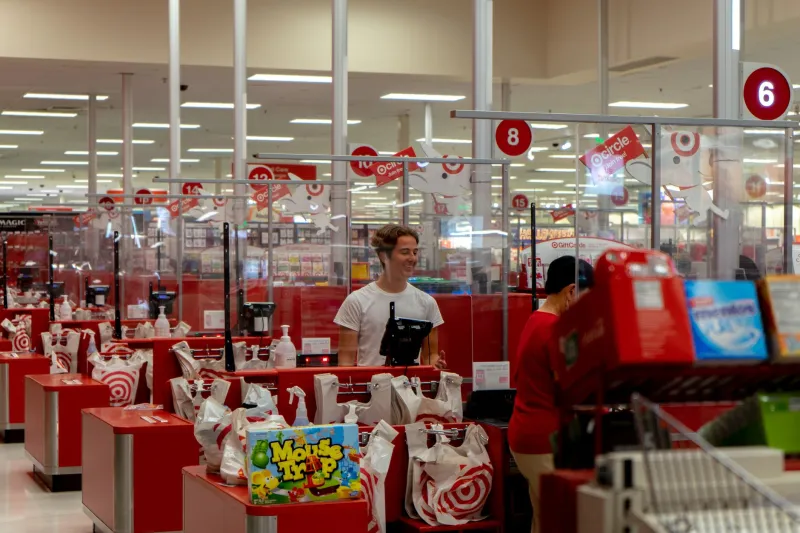
The Moment Justice Calls Your Name
You're standing in the express lane, clutching your modest collection of adult responsibilities: milk, bread, the fancy cheese you definitely can't afford but bought anyway because you're "treating yourself." Your total item count: seven. You are a model citizen of grocery store society, a beacon of lane-appropriate behavior.
Then they arrive.
Cart Number One rolls up behind you with what appears to be a small grocery store's worth of merchandise. You don't want to look. You really don't. But your peripheral vision has already begun the count, and your brain—that beautiful, petty instrument of judgment—has appointed you Chief Justice of the Express Lane Supreme Court.
The trial begins immediately.
Exhibit A: The Blatant Offender
This person has thirty-seven items. You know this because you've counted them twice, once with growing disbelief and once with the cold precision of a forensic accountant. They have three different types of pasta, four varieties of yogurt, and what appears to be enough toilet paper to survive a minor apocalypse.
But here's what really gets you: they're acting completely normal. No shame, no acknowledgment of their crimes against express lane society. They're scrolling through their phone like they're waiting for a regular checkout line, as if the giant "15 ITEMS OR FEWER" sign above their head is written in a language they've never encountered.
Your internal prosecutor is building a case. This isn't an honest mistake—this is premeditated lane fraud.
The Defense: Mental Gymnastics Olympics
But wait. Your brain, ever the contrarian, begins constructing possible defenses for the accused. Maybe they're buying for their elderly neighbor. Maybe it's a family emergency. Maybe they're new to this country and don't understand our sacred grocery store customs.
Then you see them carefully separate their bananas—four individual bananas that they could have kept in one bunch but chose to place separately on the conveyor belt. This is someone who understands the system well enough to game it.
Case closed. Guilty as charged.
The Escalating Evidence: A Crime Spree Unfolds
As if thirty-seven items weren't enough, this person commits the ultimate express lane felony: they pull out a checkbook. A checkbook. In 2024. You watch in horror as they begin the ancient ritual of manual payment processing, moving with the speed of continental drift.
But the crimes don't stop there. They ask the cashier to break down their total by category because they're "tracking their spending." They have coupons—not just any coupons, but the kind that require manager approval and three forms of identification.
You're now witnessing what can only be described as express lane terrorism.
The Jury of Your Peers: A Silent Consensus
You glance around at your fellow express lane citizens, and you see it in their eyes: the same barely contained rage, the same sense of grocery store injustice. You're all thinking the same thing, but nobody says anything because we're civilized people who resolve our disputes through aggressive eye contact and subtle head shaking.
The woman behind the offender is clutching her single bag of salad like a weapon. The guy with just a energy drink is checking his watch with the frequency of someone timing a bomb defusal. You're all united in your silent suffering, bound together by your shared commitment to express lane law and order.
The Philosophical Crimes: Questions That Shouldn't Exist
Then—and this is where the situation moves from annoying to existentially offensive—the offender asks the cashier a question that belongs in a different dimension: "What's the difference between these two types of olive oil?"
This is not an express lane question. This is a question for the customer service desk, for Google, for a cooking class, for literally anywhere except the place where people are trying to quickly purchase emergency ice cream and get on with their lives.
The cashier, bless their retail soul, begins explaining the nuanced differences between extra virgin and regular olive oil while the rest of the line contemplates the heat death of the universe.
Your Own Moral Inventory: The Uncomfortable Mirror
But here's where it gets complicated. As you stand there, mentally prosecuting this person for their express lane crimes, a tiny voice in your head whispers the uncomfortable truth: last week, you definitely had sixteen items.
Sixteen items! You were technically an offender too. But that was different, you tell yourself. That was a gray area. You had fifteen distinct items plus one that was basically a garnish. That was a rounding error, not a federal crime.
Your brain immediately begins constructing the legal framework for why your violation was completely different from this person's violation. Your sixteen items were spread out over multiple food groups. This person has six different types of crackers—that's clearly bulk shopping disguised as convenience shopping.
The Prosecution's Closing Arguments
As the line inches forward with the speed of geological change, you compile your final evidence against the accused:
- Thirty-seven items in a fifteen-item lane (blatant disregard for posted limits)
- Payment by check (crimes against modernity)
- Coupon complications (malicious time theft)
- Philosophical questions about olive oil (assault on collective sanity)
- Zero acknowledgment of their impact on others (sociopathic tendencies)
This person isn't just breaking express lane rules—they're undermining the very fabric of grocery store society.
The Verdict: Justice Delayed
Finally, after what feels like seventeen years but was probably eight minutes, the offender completes their transaction. They gather their bags with the casual efficiency of someone who has just committed the perfect crime and knows they'll never face consequences.
As they walk away, you want to call after them, to make them understand the magnitude of their express lane violations. But you don't, because you're a civilized person who handles grocery store disputes through passive-aggressive blog posts and detailed retellings to your partner later.
The Immediate Karma: When the Universe Has a Sense of Humor
You step up to the cashier, ready to complete your quick, law-abiding transaction. You place your seven items on the belt with the pride of someone who has never violated an express lane in their life (except for that one time, which was totally different).
Then the cashier looks at your fancy cheese and says, "Oh, I need to get a price check on this."
As you stand there, waiting for a manager to determine whether your artisanal gouda costs $12 or $13, you feel the eyes of the people behind you. You sense their silent judgment, their growing impatience, their mental compilation of evidence for your own express lane trial.
And in that moment, you realize the horrible truth: we're all just one price check away from becoming the villain in someone else's grocery store justice story.