The Slow Motion Panic: A Phone Battery Emergency Timeline
Stage One: The Ominous Warning
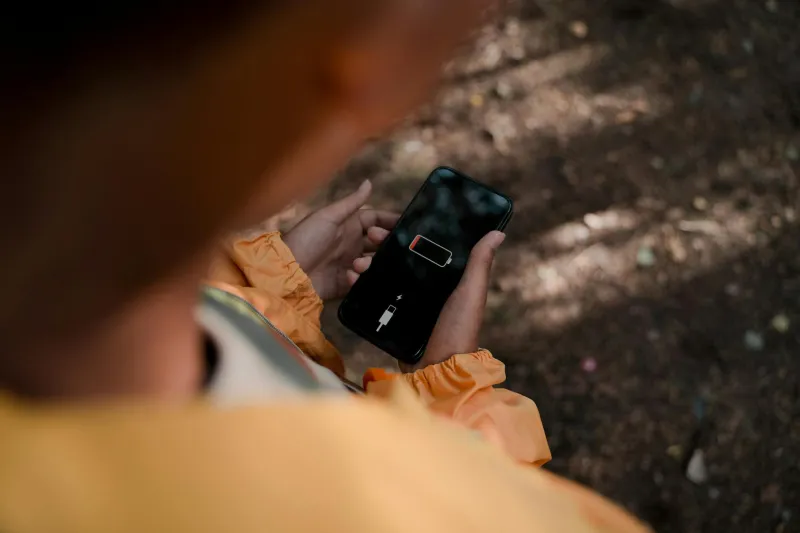
It starts with a small red notification. Nothing catastrophic. Just a gentle reminder that your battery is at 20%. You glance at it the way you'd glance at a weather warning for a storm three states away. Concerning, sure, but not your problem yet. You're in the middle of something important—refreshing Instagram for the seventh time, reading a Reddit thread about a stranger's cat, whatever. Time is plenty. Battery is plenty. Life is good.
You dismiss the notification with the confidence of someone who has never experienced actual consequences.
Stage Two: Bargaining With Your Own Device
Twenty minutes later, your phone is at 15%. Now it's personal. You open Low Power Mode like you're entering a secret bunker. Suddenly, your screen dims to the brightness of a 2004 flip phone, your apps stop refreshing, and you feel like you're living in a post-apocalyptic world where electricity is a luxury item. But it's fine. You can work with this. You can adapt. Humans are resilient.
You start making deals with your phone the way medieval peasants made deals with God. If I just stop using Maps, close all these tabs, and promise never to stream video again, will you make it to 6pm? Your phone does not respond, but you take its silence as agreement.
Stage Three: The Frantic Outlet Hunt
At 10%, panic sets in. This is when you suddenly remember that you're supposed to be somewhere important. You're not at home. You're at a coffee shop. Or worse—you're at work, and the only outlet is in the break room next to Derek from accounting, who always makes eye contact while microwaving fish.
You begin a desperate search that would make an archaeologist proud. Under tables. Behind furniture. In the bathroom. Is that an outlet behind the trash can? Does it matter? You're considering it. Your phone is now at 8%, and you've calculated that you have exactly four minutes to send one critical text message before you're thrust into the digital dark ages.
You spot a outlet. It's occupied. There's a phone charger already plugged in. Whose is it? You don't know. You don't care. You wait anyway, hovering like a vulture, hoping the charger's owner has abandoned it.
Stage Four: The Acceptance of Temporary Irrelevance
At 3%, you've made peace with your fate. You're going offline. Not by choice, but by necessity. You send one final message—something vague like "might lose signal"—to cover your tracks. You silence your notifications. You accept that you will be unreachable for the next hour or however long it takes to find a charger.
This is strangely liberating. No one can expect you to respond. You have a legitimate excuse to ignore your boss, your friends, and that group chat that's been going for 47 messages. You are, for the first time today, free.
Stage Five: The Miraculous Recovery
You find a charger. Relief washes over you like you've just been rescued from a deserted island. Your phone powers back to life. Messages flood in. Notifications appear. The world has continued without you, and somehow, it's still spinning.
You plug in your phone and immediately forget the entire ordeal. Your battery anxiety completely evaporates. You scroll through your phone for another two hours, running the battery back down to 15% before the cycle repeats.
The Moral of the Story
We treat phone batteries like they're a finite resource that will determine our survival. A 20% warning triggers the same biological response as a bear sighting. We panic. We bargain. We make irrational decisions. We hover near strangers' chargers like we're waiting for a table at a restaurant.
And yet, every single time, we somehow make it. Our phones don't actually die. Civilization doesn't collapse. Derek from accounting doesn't judge us (okay, he definitely judges us, but not because of the charger situation).
But next time your battery hits 20%? You'll panic exactly the same way. Because learning from experience is for people who don't have smartphones.