The Academy Award Performance of Being 'Not Really Hungry' While Your Soul Screams for Carbs

The Opening Act: Confidence in Deception
There you are, standing outside Olive Garden with six friends, and someone asks the fatal question: "Are you hungry?" Your stomach is literally eating itself. You haven't had a proper meal since that sad granola bar at 11 AM. But something deep in your socially-conditioned brain takes control of your mouth and delivers the performance of a lifetime: "Oh, I'm not that hungry. I'll probably just get something small."
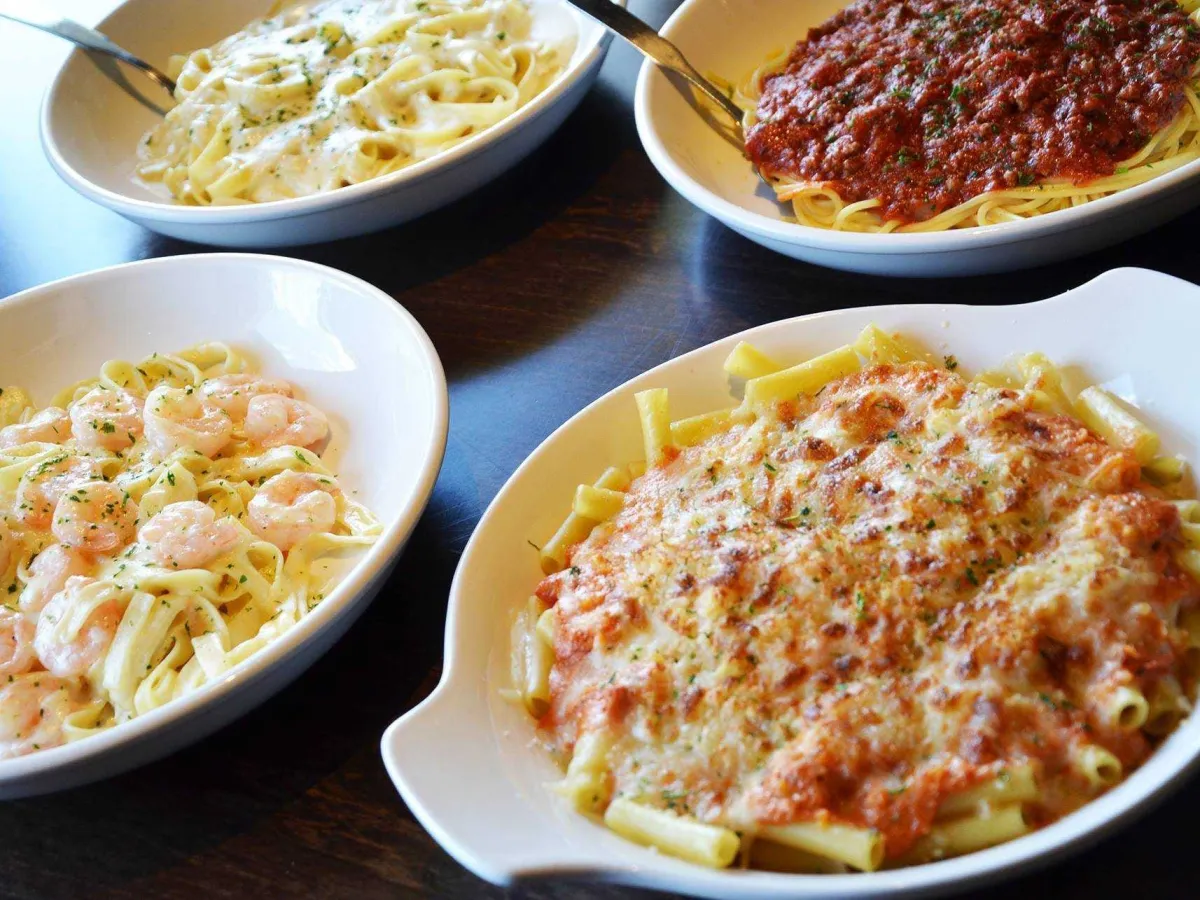 Photo: Olive Garden, via static4.businessinsider.com
Congratulations. You've just committed to the most elaborate lie since "I've read the terms and conditions."
The Method Acting Begins
Once seated, you study that menu like you're preparing for the SATs. Your eyes dart longingly over the Tour of Italy, the Never Ending Pasta Bowl, the beautiful, carb-loaded promise of the Chicken Alfredo. But you've painted yourself into a corner. You're the person who's "not that hungry." You have a reputation to maintain.
So you order a side salad. Maybe some soup. Definitely not the breadsticks, because that would blow your cover, even though those breadsticks are calling to you like sirens to a sailor.
Meanwhile, your friends are ordering with the confidence of people who haven't trapped themselves in a web of dietary lies. They're getting appetizers, entrees, desserts. They're living their truth while you're living in a prison of your own making.
The Hunger Games: Fry Edition
Twenty minutes later, the food arrives. Your "small" Caesar salad looks like something a rabbit would leave unfinished. Everyone else has plates that could feed a small village. And then it happens – the communal offering.
"Want some fries?"
This is your moment. You calculate with the precision of a NASA engineer. How many fries can you take without seeming desperate? Three? Four? If you take five, does that blow your "not hungry" story? What's the socially acceptable ratio of claimed hunger to actual fry consumption?
You take exactly two and a half fries, chewing them with the restraint of someone who definitely isn't thinking about how good they taste and how much you want approximately forty-seven more.
The Mental Mathematics of Meal Theft
As dinner progresses, you become a master strategist. When Jake gets up to use the bathroom, you eye his loaded baked potato. When Sarah's deep in conversation, you contemplate the logistics of casually reaching for one of her mozzarella sticks.
You start timing your "I'll try a bite" requests. Can you ask to sample three different people's meals without seeming like a food burglar? What's the statute of limitations between bite requests? If you tried Emma's pasta five minutes ago, how long before you can innocently ask about Mark's chicken?
Your brain becomes a complex algorithm calculating social acceptability versus caloric necessity.
The Dessert Dilemma
Then comes dessert. Everyone's ordering tiramisu and chocolate cake, and you're sitting there like someone who definitely doesn't want dessert because you're definitely not hungry. But you've been subsisting on stolen fries and borrowed bites for an hour.
Someone suggests sharing desserts. This is your lifeline. You can participate in dessert without officially ordering dessert. You're not breaking character; you're just being social. It's not about the food; it's about the friendship. (It's definitely about the food.)
The Drive-Thru of Shame
Forty-five minutes later, you're saying goodbye to everyone, maintaining your character until the very end. "That was perfect, I'm so full!" you lie, while your stomach growls in protest.
But the real performance begins when you're alone in your car. You sit there for exactly thirty seconds before googling "nearest drive-thru." Because now you're actually starving, and you need to eat like a normal human being who doesn't lie about basic biological needs.
You pull up to McDonald's and order enough food for three people. The drive-thru worker doesn't judge you – they've seen this before. They understand the post-social-dining shame spiral.
The Aftermath: Living With Your Choices
As you sit in your car eating a Big Mac at 9:30 PM, you reflect on your choices. Why did you do this to yourself? Why did you choose social performance over basic sustenance? Why is it easier to lie about hunger than to just... order food?
But deep down, you know the truth. Tomorrow, when your coworkers suggest lunch, you'll do it again. You'll look at that menu, feel your stomach rumbling, and somehow convince yourself that you're "not that hungry."
Because this isn't about food. This is about the elaborate theater we perform to convince others (and ourselves) that we're the kind of people who have normal, controlled relationships with basic human needs. We're the kind of people who don't plan our entire day around the next meal.
Spoiler alert: We absolutely are not those people. But we'll keep performing anyway, one stolen fry at a time.