The Digital Amnesia Crisis: How 'Forgot Password' Became a Journey Into the Void

The Moment of Reckoning
You're trying to log into your Amazon account to buy something completely essential (okay, it's probably socks), and suddenly you're staring at a login screen like it's written in ancient hieroglyphics. Your fingers hover over the keyboard with the confidence of someone who definitely remembers their password. After all, you've been using this account since the Bush administration.
You type in what you're 90% sure is your password. Access denied. No problem – you probably just hit caps lock by accident. You try again, this time with the careful precision of a bomb defuser. Access denied.
That's when it hits you: you're about to enter the password reset spiral, and there's no telling when you'll emerge.
Stage One: Optimistic Denial
You click "Forgot Password" with the casual confidence of someone who thinks this will take thirty seconds. The system asks for your email, and you provide it like you're answering a question you've known since kindergarten.
"We've sent a reset link to your email."
Perfect. You switch tabs to check your email, already mentally composing your Amazon cart. Except... there's no email. You refresh. Nothing. You check spam. Nada. You start to wonder if you've somehow forgotten your own email address, which would be a new low even for you.
Five minutes pass. Still nothing. You click "Resend email" with slightly less confidence than before.
Stage Two: The Email Address Archaeology
That's when the horrible realization dawns: you might not be using the email address you think you're using. This account is old. Like, "you created it when you thought hotmail was cutting-edge technology" old.
You start cycling through every email address you've ever owned. The Gmail account from 2007. The Yahoo account you're embarrassed to admit you still check. The college email that probably died with your youth and optimism. That weird email you created for online shopping that was supposed to keep your main inbox clean but instead just created more chaos.
Each attempt feels like trying to remember the name of that actor from that movie about the thing. You know it's in there somewhere, but your brain has apparently decided this information is classified.
Stage Three: Password Archaeology
Finally, you get a reset email. Victory! Except now you have to create a new password, and the system has opinions. It needs to be at least 12 characters, include uppercase, lowercase, numbers, symbols, your mother's maiden name, and the blood of a unicorn.
But here's the thing: you can't just create any password. You have to create a password that Future You will remember, and Future You is apparently an idiot who can't remember anything. So you start crafting something that feels both secure and memorable.
You type in your go-to password variation. "Password must not be similar to previous passwords." Apparently, you've already used this exact strategy before, multiple times, like some kind of password groundhog day.
Stage Four: The Security Question Nightmare
But wait, there's more! The system wants to verify your identity with security questions. Questions you answered in 2009 when you were a completely different person with completely different opinions about everything.
"What was the name of your first pet?"
Was it Fluffy? Or did you put Fluffy because that seemed like a good fake answer? Did you capitalize it? Did you include the last name? Was your first pet actually your neighbor's cat that you fed sometimes? Are you overthinking a question about a goldfish that died during the Obama administration?
You try every variation you can think of. Fluffy. fluffy. FLUFFY. Mr. Fluffy. Fluffy the Cat. That Fish I Killed. You're basically playing password roulette with your own memories.
Stage Five: The Identity Crisis
Twenty-five minutes in, you start questioning everything. Who are you? What do you actually remember? Is this even your account? Maybe you never had an Amazon account. Maybe you've been living someone else's digital life this entire time.
You stare at the screen, wondering if this is what amnesia feels like. Except instead of forgetting your family, you've forgotten every digital decision you made between 2009 and 2015.
The worst part? You can remember the exact plot of every episode of The Office, but you can't remember if your security question answer was your high school mascot or your childhood street name.
 Photo: The Office, via images.squarespace-cdn.com
Stage Six: Acceptance and Defeat
Forty minutes later, you finally get access to your account. You immediately go to your account settings and see a password that looks like it was created by a random number generator having an existential crisis. Apparently, Past You was very security-conscious and very optimistic about Future You's memory capabilities.
You update everything with information that Present You will definitely remember. You write it down. You store it in your phone. You consider tattooing it on your arm.
But deep down, you know the truth: in six months, you'll be back here again, staring at this same login screen, wondering why you thought "MyDogsFavoriteFood2023!" was something you'd obviously remember forever.
The Philosophical Conclusion
As you finally complete your sock purchase (which, let's be honest, you could have done at any physical store in a fraction of the time), you reflect on what just happened. You didn't just reset a password; you took a journey through your own digital identity, questioned your life choices, and emerged a slightly more paranoid person.
The real tragedy isn't that you forgot your password. It's that somewhere in your digital past, there's a version of you who set up all these security measures thinking, "Future Me will definitely remember this." That person had such faith in your memory, such optimism about your organizational skills.
That person was wrong about everything.
But they were trying to protect you, and honestly, that's kind of sweet. Even if they did create a security system that would make Fort Knox jealous and your own brain its biggest enemy.
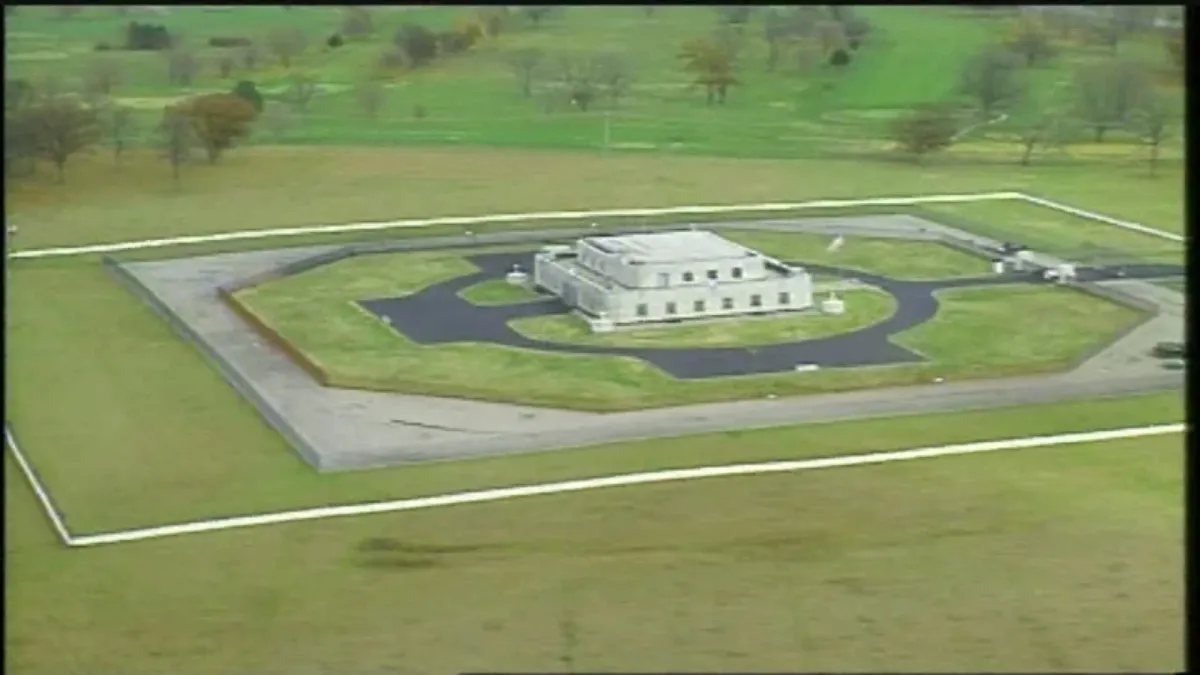 Photo: Fort Knox, via media.whas11.com