The Art of Confident Confusion: How to Masterfully Pretend You Know Where You're Going
The Opening Act: Maximum Confidence
It starts so well. Someone asks if you know how to get to that new restaurant downtown, and before you can admit you still get lost in your own neighborhood, they're already launching into what can only be described as a verbal GPS system designed by someone who clearly peaked in orienteering class.
"Okay, so you're going to head north on Main Street," they begin, and you're nodding enthusiastically because north is totally a direction you understand. You've got this. You're a functioning adult who knows cardinal directions and can follow simple instructions.
Then comes the avalanche.
The Point of No Return
"Then you'll take a right at the Starbucks—not the first Starbucks, the second one, next to where the old RadioShack used to be—and go about three-quarters of a mile until you see a blue house with a weird mailbox shaped like a fish."
This is where your brain starts making that Windows error sound. Three-quarters of a mile? Are you supposed to be measuring this? And what constitutes "weird" in the mailbox department? But you're still nodding because stopping now would require admitting you lost the thread somewhere around "not the first Starbucks."
Your face maintains the expression of someone absorbing crucial information while your internal monologue screams, "THERE ARE TWO STARBUCKS?"
The Elaborate Performance Begins
"After the fish mailbox, you'll want to hang a left at the light—it's a really quick light, so be ready—and then it gets a little tricky because you'll pass a McDonald's, but don't turn there. Keep going until you see another McDonald's, and that's where you turn right."
At this point, you've entered what psychologists probably have a fancy name for: Directional Dissociation Disorder. Your body is present, nodding at appropriate intervals, occasionally throwing in an "uh-huh" or "got it," but your consciousness has fled to a simpler time when all you needed was "take Main Street to the place."
You start doing that thing where you repeat back fragments to buy time and appear engaged: "Right, so left at the fish mailbox..." But you're really just hoping they'll somehow simplify the remaining seventeen steps into something like "then just keep driving until you see it."
The Advanced Techniques of Navigational Fraud
By now, you've developed a sophisticated system of responses designed to mask your complete geographical bewilderment:
The Thoughtful Pause: "Hmm, okay, let me make sure I've got this..." (Translation: Please repeat everything because I was thinking about lunch.)
The Confident Clarification: "So that's right at the second McDonald's, not the first one?" (Translation: There are two McDonald's? When did this happen?)
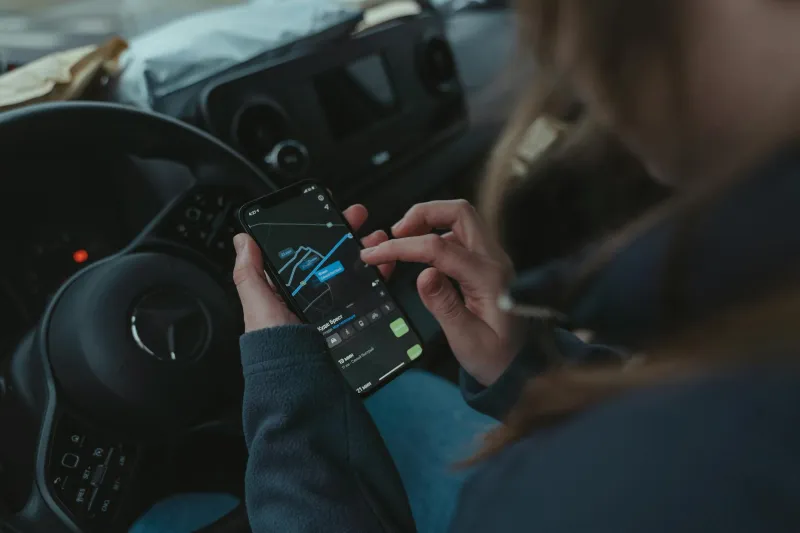
The Strategic Phone Fumble: "Let me just put this in my phone real quick..." (Translation: I'm opening Google Maps and praying it can decode whatever I just pretended to understand.)
The Final Act: Committed to the Lie
They wrap up with something like, "And then it's right there on your left, you can't miss it!" Famous last words. You absolutely can and will miss it, possibly multiple times, but you're nodding like they just gave you the secret to cold fusion.
"Perfect, thanks so much!" you say, as if you didn't just experience the mental equivalent of trying to remember a dream five minutes after waking up.
The Aftermath: GPS Dependency and Strategic Delays
Twenty minutes later, you're sitting in your car, staring at your phone like it holds the answers to the universe. You type in the destination and watch as Google Maps plots a route that bears absolutely no resemblance to the verbal novel you just received.
You arrive fifteen minutes late with a prepared excuse about "construction" or "traffic," because admitting you got lost following directions you pretended to understand would shatter the careful illusion of competence you've spent years building.
The Universal Truth
The real tragedy isn't that we get confused by directions—it's that we've all collectively agreed to pretend we don't. We nod along to increasingly complex navigational dissertations because admitting we need written directions or—God forbid—GPS assistance feels like confessing we've failed at basic human functioning.
But here's the thing: everyone's doing it. That person giving you directions? They probably got lost three times trying to find the place themselves. The only difference is they've now convinced themselves they're a local geography expert.
So the next time someone starts explaining how to get somewhere using landmarks that sound like they were pulled from a treasure map, just remember: confident nodding is a performance art we've all mastered, and getting lost is just the encore nobody talks about.